| |
|
|
|
>> SWISS MISSION |
|

|
The Holy Spirit chose
these men who dared to
dream............ |
 |
|
 |
|
 |
|
 |
|
MONSG. BERNARD
BURQUIER
(1932 - 1943) |
|
MONSG. LOUIS SEVERIN
HALLER
(1943 - 1970) |
|
MONSG.
HENRI SALINA
(1970 - 1999) |
|
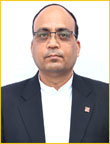
MONSG.
JOSEPH RODUIT
( 1999 - ) |
|
|
|
.......... and
they delegated these
Heroes to fulfill
the dream. |
 |
 |
 |
 |
|
FR. ANDRE BUTTY |
FR.
AUGUSTE SCHYRR |
FR. AURELIO
GIANORA |
FR. PAUL THURLER |
| |
 |
 |
 |
 |
|
FR. EMMANUAL GEX
COLLET |
FR. GUSTAVE
ROUILLER |
FR. HUBERT
RUCKSTUHL |
FR. JEAN MARIE BRAHIER |
| |
|
 |
 |
 |
 |
|
FR. JOHN ROGER
FOX |
FR. MARTIN REY |
FR. MEINRAD
PITTET |
FR. ROBERT
EIGENMANN |
| |
 |
 |
 |
 |
|
FR. PATRICE
VERGERES |
FR. J. HOFSTETTER |
FR. SIMONE
VERMONT |
FR. E. GRESSOT |
|
|
|
|
|
|
|
THE
MINISTRY OF THE CANON REGULARS OF
ST. MAURICE SIKKIM APOSTOLIC
PREFECTURE (1934 – 1962)
|
Msgr. Marietan, the Abbot of
the Canon Regulars of St.
Maurice Abbey, Switzerland
on receiving an appeal from
His Holiness Pope Pius XI,
wished to do something for
the Mission. With this
intention, he went to France
to meet Archbishop De
Guebriant, the then Superior
General of the Foreign
Mission Society of Paris.
Being very pleased with the
offer of the Abbot, Msgr. De Guebriant suggested that he
send a few Canon Regulars
(CR) to help the MEP Fathers
at St. Joseph's College,
Bangalore (South India).
St. Joseph’s was a school
run by the Foreign Mission
Society. A first batch of
CRs left for Bangalore in
Jan. 1930 and a few more
followed. One amongst them
was Fr. A. Schyrr who
arrived in Oct. 1932.
|
|
| |
|
|
Msgr. Burquier, the new Abbot
of St. Maurice went to
Paris. There Msgr. De Guebriant unfolded before
him the immense map of the
forty-two dioceses under the
care of the MEP Fathers
(Foreign Mission Society of
Paris). Pointing at the
Sikkim Apostolic Prefecture
on the map of India, he told
the Abbot: "That is the very
place for you Swiss people.
Go and have a look at it and
see for yourself what you
can make of it".
In Oct. 1933, Msgr. Burquier
left for India taking with
him an English-speaking monk
Fr. John Roger Fox CR, as a
companion. Traveling by sea
they reached Madras on
2/11/33 and from there by
train a day later to St.
Joseph's College, Bangalore.
After a break of two weeks
they continued their journey
up to Calcutta where they
met Msgr. Perier and from
there they proceeded to
Kalimpong and Pedong. Msgr. Douenel welcomed them at
Siliguri. |
|
|
|
|
THE
STUDY OF THE PLACE.
On reaching Kalimpong and Pedong
towards the end of Nov. 1933 the
Abbot tried to familiarize himself
with the place and its surroundings.
He found the geographical features
of the area were very akin to that
of Switzerland. Both were
mountainous regions with high
snow-clad peaks, a cool but pleasant
climate very salubrious to health.
The place was indeed very ideal for
his monks who lived in the Alpine
Mountains. It would not be too hard
for them to get themselves
acclimatized. But more than the
grandeur of the mountains, the
simplicity and innocence of the
people were more appealing and
worthy of receiving the message of
Christ. They would be able to preach
to them and transform their lives. A
fair number of Christians were
already there with churches,
schools, orphanages. These provided
enough work for a dozen of priests. |
|
DECISION
TO TAKE UP THE MISSION WORK.
|
Returning to St. Maurice on
18/12/1933, the Abbot and
his Council decided after a
good deal of deliberations
with all involved that they
should take up the Mission
work and give a helping hand
to the Missionaries of the
Foreign Mission Society (MEP
Fathers). An agreement was
reached between the Foreign
Mission Society of Paris and
the Canon Regulars of St.
Maurice in May 1934. The
first agreement was to help
the French Missionaries in
the pastoral work in the
Region of Kalimpong under
the Sikkim Prefecture. Fr.
Aurelius Gianora and Fr.
John Roger Fox were sent to
India on 15/10/34. They
reached first Calcutta and
then Kalimpong on 17/12/34. |
|
|
THE
BEGINNING OF THEIR MISSION WORK.
|
In 1935 they were taken to
Pedong by Msgr. Jules Douenel.
They stayed there helping
the French Fathers, learning
the language and culture of
the people and acquiring
Missionary experiences. They
were soon followed by two
other Canon Regulars
priests: Fr. A. Schyrr and
Fr. Martin Rey in Dec.1935.
They were sent to Pedong to
help Fr. John Roger Fox and
Fr. A. Gianora and to learn
the language. They lived
together as one community at
Pedong till they got their
individual assignments. In
1936 Fr. Martin Rey was sent
to Maria Busty to help Fr.
Benjamin Stolke.
|
|
|
THE
RESPONSIBILITY OF THE UNIVERSAL
CHURCH.
The appeal of Pope Pius Xl had
brought the Canon Regulars of St.
Maurice to offer their service to
the Mission and help out those old
French Missionaries. The Universal
Church had to take a decision as to
who should ultimately run the
Mission in the present situation.
After due deliberations and
consultations an agreement was
reached and the Foreign Mission
Society of Paris agreed to hand over
the Mission of Sikkim to the Canon
Regulars, the monks of St. Maurice
Abbey, Switzerland. On 30th
June 1937, the old French Fathers
who had been working there for the
last forty-five years handed over
the Prefecture Apostolic with a
heavy heart and tears to Msgr. Gianora who had been elected as the
new Prefect Apostolic on 14th
May 1937. |
|
AN
UPHILL TASK.
The responsibility of the Mission
was a very onerous one for a young
man of just twenty-nine years and
someone who was only into his fourth
year in the priesthood. But the need
of the Mission was so great that an
exception had to be made. Since Msgr. Gianora was a man of great caliber,
he would be able to run the Mission
it was hoped. For that it needed the
setting up of a new administrative
arrangement, restructuring of the
organizational frame-work, proper
assignments of the manpower at hand,
regular evaluation and assessment of
the ministries undertaken and other
necessary adjustments.
In the first place it was necessary
for Msgr. Gianora to know the state
of the whole Mission. The juridical
area to be covered was large and
extensive. It comprised of the whole
State of Sikkim and the sub-division
of Kalimpong. Sikkim had an area of
7295 sq. kms and Kalimpong 1067 sq.
kms, altogether an area exceeding
8000sq.kms. But Sikkim being still a
‘Forbidden
Land’ did not have a Mission
or a single Catholic yet. The
population of Sikkim was 1,10,000
and of Kalimpong 68,200. But
the total Catholic population of the
Mission was 969 only. |
|
THE
MINISTRY OF THE PREFECTURE UNDER THE
CANON REGULARS.
A restructuring had to begin with
new assignments, a proper
distribution of the man-power
according to the capabilities of
each. Soon after taking over the
Mission he assigned ministries to
each priest. He had to reshuffle the
earlier assignments and give new
ones to all of them. He first
brought back Fr. A. Schyrr from Maria
Busty and appointed him the
Vice-Prefect of the Mission on 5th
July 1937. He had to take charge of
the orphanage as Msgr. Gianora
himself had to move to Kalimpong to
assume the responsibility of the
Prefect Apostolic. The financial
need being great Msgr. Gianora had to
send Fr. J. R. Fox to England to
collect funds for the Mission. It
was only after taking over the
Mission did the Prefect became aware
of the precarious financial
situation. |
|
HINDRANCE TO THE WORK OF
EVANGELIZATION.
As the Missionaries tried to bring
more people to faith they were
confronted with several types of
religions in practice. As regards
their religious belief the populace
was either Hindus or Buddhists or
Animists. Almost all of them
believed in ghosts and spirits. They
had several other superstitious
beliefs also. Sorcery was common.
They were holding on to their
ancient beliefs and not willing to
change. It was a great hindrance to
the work of evangelization.
Socially they were oppressed,
neglected. They had no power and
position and they were exploited by
their own people including their own
leaders and teachers. The
Missionaries had to see to all these
problems and start doing something
about them.
In the mean time the arrival of Fr.
Andreas Butty in the month of April
made Msgr. Gianora very happy. The
addition of a young missionary of
just 35 years to his team indeed
made his task much lighter. Fr.
A. Butty was a teacher and had some
knowledge of English. He had been an
Inspector of Schools and the youth
in-charge before coming to the
Mission. He was immediately sent to
Pedong to help Fr. A. Schyrr in the
orphanage which was built in 1901
and was now in a very dilapidated
state.
But the eyes of Fr. A. Butty was
focused on Tibet, the place where
the French Missionaries were denied
entry but were always longing to set
foot on. Tibet was indeed a
forbidden land to the Missionaries.
Taking Mr. Chintu Rai of Pedong and
Denis Molomoo of Kalimpong with him
and two mules with drivers for
carrying their luggage, Fr. A. Butty
went stopping at Dak Bunglows as far
as Pharizong and returned in the
month of June.
The accounts of their journey are
found in their individual files.
After his return from Tibet Msgr.
Gianora left for Switzerland to meet
the Abbot and to discuss with him
the problems and needs of the
Mission. He needed the necessary
guidance to plan a strategy. He also
needed financial help . The Mission
work was not at all easy for the
Canon Regulars in the beginning. |
|
SECOND
WORLD WAR AND AFTERMATH.
There were both serious internal and
external problems beyond their
control. Soon after taking over the
Mission, the Second World War broke
out in Europe. It created a new
situation both in Europe and in the
Mission. Several countries were
involved in the war both in the East
and the West. India being a part of
British Empire too got sucked into
the conflict. Msgr. Gianora himself
got held up in his country and could
not return to the Mission
immediately The Missionaries were at
a loss a regards the manner in which
they should go about the Mission
work. They faced lots of hardships
including difficulties of a
financial nature.
|
|
CONCERN
FOR EDUCATION.
Fr. M. Rey being concerned about the
education of the growing children
reorganized the school by employing
some educated local Catholics. Those
passing out from the Primary were
sent to Pedong Middle school. He
also employed Miss Patricia Rai, a
lady teacher and a former student of
St. Philomena’s School, Kalimpong.
At the end of the year on 3rd
Dec. the Prefect Apostolic managed
to return to the Mission with Fr.
Jean Mary Brahier, apparently by
land-route through the Middle East.
It was a great relief for everybody
in the Mission. Even during his
absence, in spite of war and the
problems caused by it there had been
significant progress in the
activities of the Mission, mainly
due to the hard work, courage and
optimism of the Missionaries under
the able guidance of Fr. A. Schyrr,
the Vice-Prefect.
Towards the end of the year
Msgr. Burquier, the Abbot
sent Fr. Robert Eigenmann
and Fr. Patrick Vergers to reinforce the
Mission. Their job was to
revitalize the already
existing Missions,
restructuring and supporting
them with the necessary
infra-structure and other
inputs.
During the war time and in the
absence of the Prefect, the
Mission faced lot of
administrative difficulties.
Fr. A. Schyrr, the
Vice-Prefect had to pay more
attention to the Centre,
i.e. the seat of the
Prefecture. Fr. JR Fox had
to be brought to Kalimpong
from Maria Busty to serve as
the Chaplain of St. Joseph’s
Convent. Fr. G. Rouiller
from Gitdabling to assist
Fr. Peter Ranger in
Kalimpong. Fr. Patrick
Vergers was sent to
Gitdabling to assist Fr. P.
Thurler and Fr. Robert
Eigenmann was sent to Maria
Busty to help Fr. M. Rey and
also learn Nepali for a few
months. Fr. Benjamin Stolke
also had to come to
Kalimpong from Gangtok.
Fr. A Schyrr took over
the charges as the
Headmaster of Pedong School.
Fr. A. Butty was appointed
in-charge of the orphanage.
He stared a cattle farm to
support the orphanage.
All the same Msgr. Gianora
saw the necessity of
expansion and changes in the
Mission for further
progress. This period of war
needed new visions and
initiatives towards
strengthening the Mission
work. In the first place he
assigned a ministry to Fr.
M. Brahier by sending him to
Pedong in the month of
January and to Maria Busty
in the month of May to learn
Nepali. In the month of July
he was sent to Gitdabling to
help Fr. P. Vergeres. He
brought Fr. P. Thurler from
Gitdabling to be the
Chaplain of St. Joseph’s
Convent in the place of Fr.
J. R. Fox and to assist Fr.
G. Rouiller who was
appointed as the Parish
Priest of St. Teresa’s on
first July 1941.
Fr. Peter Ranger often passed
through Algarah a small market to
and fro Gorubathan. His frequent
contact with the people there and
also the fact that his eldest
brother had a cottage in the bazaar
gave him an opportunity to make an
opening at Algarah Bazar. Making
good use of such providential
arrangements he started a small
station in one of the rooms of his
brother’s house.
Fr. J. M. Brahier received another
transfer from Git to Maria Busty but
this time as an assistant to Fr.
Martin Rey. While looking after the
Lepchas of Changsing he saw the
plight of these simple folk who
faced famines and were unable to
save paddy seeds for sowing in their
lands when the planting season
arrived. Fr. J. M. Brahier then hit
upon this idea of starting a
Cooperative for the collection and
distribution of paddy seeds. But the
farmers who were given seeds for
sowing used the same for their next
meal and were unable to repay as
there was no production. The
Cooperative failed. The Lepchas
indeed needed an economic system but
being illiterate they had not
understood the concept of a
Cooperative.
The Second World War was engulfing
the whole world and even the East
was not immune. Japan joined hands
with Adolf Hitler and as a member of
the Axis invaded territories in the
East. She started attacking Burma,
Assam by ground force and artillery
and began bombarding, the naval and
air bases. After attacking the air
base of the US at Pearl Harbor and
destroying the Queen Elizabeth naval
ship by a suicide aircraft she
started bombing Dumdum Airport in
Calcutta. Because of such
developments the life of the nation
was fully paralyzed and came to a
stand-still. The fear of further
attacks had gripped the people of
Bengal, particularly those in
Calcutta. A total black-out was
clamped. The people fled to safer
places and educational institutions
were shut. The Catholic parents not
knowing what to do about the
schooling of their children sought
the help of Fr. Benjamin Stolke
whose relatives were living in
Calcutta. |
|
GENESIS
OF ST. AUGUSTINE’S SCHOOL.
Rev. Fr. B. Stolke out of concern
for these children displaced by the
fear of war began an initiative to
educate them. These coaching classes
that were meant especially for the
Catholic children taking shelter in
Kalimpong were organized in some
rooms of the Presbytery with the
consent of the Prefect Apostolic. He
was assisted by Fr. Paul Thurler the
then chaplain of St. Joseph’s
Convent. These humble coaching camps
initiated by Fr. B. Stolke and
Fr. Paul Thurler later grew into
formal classes. This eventually lead
to the establishment of the popular
St. Augustine’s School (SAS) of
Kalimpong.
We can thus safely consider the duo
of Fr. B. Stolke and Fr. Paul
Thurler as being the founders of St.
Augustine's School, Kalimpong.
Msgr. Gianora even in the midst of
war tried to continue the expansion
of the Mission by intensifying its
activities and bringing more
Missionaries from St. Maurice to man
the new stations and institutions of
the Prefecture covering a large area
of Kalimpong Sub-division. These
extended beyond the Relli River,
touched the plains of Bagrakote,
Chelle River, Patthar Jhora, Ambiok
and Jaldhaka ending at the
border with Bhutan. A shortage of
Missionaries prompted Msgr. Gianora
himself to take up the Parish work
and also look after the schools
wherever necessary. He even started
teaching in Pedong School where
there were 100 pupils. To do this he
walked all the way from Kalimpong
every morning..
In Kalimpong Msgr. Gianora was
pleased to acquire some 45 acres of
land adjacent to other Mission land
from Mr. Santosh Singh Bhutia. The
acquisition of sufficient land
provided Msgr. Gianora with further
opportunities to expand the reach of
the Mission. He planned on opening a
Monastery for his Order and starting
a High School for the boys. Due to
some reason or the other the plan to
start the Monastery did not see the
light of day. |
|
THE END
OF THE SECOND WORLD WAR.
The dropping of the atomic bombs on
Hiroshima and Nagasaki in August of
19 dealt a death blow to the Axis
powers and hastened the end of the
Second World War.
But the effects of the wars were
disastrous especially for Japan
where millions of people died and
the economy of the country was in
shambles. The War indeed was a total
disaster inflicted upon humanity.
Many nations were wiped off from the
face of the earth and national
boundaries re-drawn. The death
toll was very high and the cost of
war in economic terms staggering and
beyond estimate. All the essential
goods were either not available or
had become scarce. The price of all
essential goods and commodities
soared and took a long time to
stabilize. But in spite of all that,
humanity wanted to start all over
again and still aspired to live in
peace.
The Missionaries too had undergone
tremendous hardships and privations
during the time of the war. They had
also worked hard and needed a break.
Fr. A. Schyrr, the Vice-Prefect had
been at the helm of affairs during
the absence of the Prefect for more
than a year. He had to shoulder the
responsibility of looking after the
whole Mission besides taking care of
the administration of the School. He
needed a break that would allow him
to go back to his native place and
be with his own people.
He had been away from home for more
than ten years ever since he came to
the Mission in 1935. He left the
charge of the School and the Parish
in the hands of Fr. Leonard Molomoo
who had just been ordained.
The Prefect Apostolic concentrated
more on the development of the
Mission.
He fully took over the school and in
1945 officially named it St.
Augustine, after the founder of his
Order. The new Presbytery which was
just constructed was used as a
provisional building to house the
school till suitable arrangements
were made. Fr. G. Rouiller
constructed an attic on the top to
accommodate some 25 boarders. Fr.
X.
Eberhard who had arrived in April
was immediately appointed the
Pioneer Principal of the School |
|
THE
FIRST VISIT OF MSGR. LOUIS SEVERIN
HALLER.
Because of his concern and interest
for the Mission undertaken by his
Order, Msgr. Haller the new Abbot
made his first visit to the Mission
on 28th Dec 1946. It was
an eventful and historic moment for
the Canon Regulars and the whole
Prefecture. All the decisions taken
by him would determine the future of
the whole Mission. To make such a
long trip taking several days, all
the way from the real Switzerland to
what could be called the Switzerland
of the East, needed tremendous
fortitude and spoke volumes about
the love that he had for the Mission
in this part of the world. The Canon
Regulars were very happy to have
their Abbot in their midst listening
to their sad and joyful experiences.
They were indeed elated and
gratified to share their dreams and
aspirations with the highest
authority in their organization. The
future of the Mission and the life
of each individual Missionary rested
much on the assessment and
observation he made as he listened
intently to the fears and concerns
and hopes of each Missionary. This
exchange helped him get a first hand
knowledge of their needs, problems
and difficulties. |
|
THE POST
- INDEPENDENCE ACTIVITIES.
After the Independence of India, the
Missionary activities also
multiplied and intensified. The
Missionaries felt that they too had
some responsibility in contributing
towards the nation building work
that was now undergoing in full
swing. During the war all the
progressive work had come to a
stand- still. The country needed to
develop swiftly in practically every
field. Although the actual fighting
was over, the effects of the war
lingered. There was still a scarcity
of many essential commodities. The
price rise of all essential goods
continued unabated. The Prefect and
his Missionaries wondered which
problems should be tackled first and
by what means. They themselves being
affected by the war had no resource
to begin any new ministry or to take
up humanitarian projects. They had
to give priority to the spiritual
need of the people. Knowing the need
of the Mission Msgr. Haller the Abbot
sent more Missionaries towards the
end of the year in the persons
of Frs. Emmanuel Gex Collet, Edward
Gressot, Minrad Pittet and Simon
Vermot.
Msgr. A. Gianora and Fr. R. Eberhard
welcomed them at Siliguri and
brought them Home
Msgr. Gianora assigned ministries to
the new arrivals. Fr. Minrad Pittet
was appointed an assistant to Fr. J. M.
Brahier in Gitdabling. Fr. Gex
Collet was made an assistant to Fr.
Brahier and Fr. M. Pittet. Fr.
Edward Gressot was appointed an
assistant to Fr. M. Rey in Maria
Busty. Fr. Simon Vermot was sent to
Shillong to learn
English, Maths and Bengali and
to also take up duties as the
Chaplain of the Christian
Brothers. In Kalimpong Msgr. Gianora
appointed Fr. Albert Lee, a Diocesan
priest, as an assistant to Fr. Eberhard in St. Augustine’s School.
Fr. A Butty moved to the new
property and expanded his Farm with
the senior orphans of Pedong. They
settled in mud-houses with thatched
roofs made of bamboos and
other local materials. Fr. A. Butty
was also appointed as the chaplain
of St. Joseph’s Convent. Fr. E.
Gresssot was given the added
responsibility as a teacher of St.
Augustine’ School. By the
end of the year
two more Missionaries,
Fr. Joseph Hofstetter and
Bro. Peter Grobety arrived on
13th Nov.1948. Fr. J.
Hofstetter was sent to Todey to help
Fr. R. Eigenmann. Bro. P. Grobety
was given the charge of the
House. He helped both in the
Parish and the school.
Fr. Simon Vermot after his return
from Shillong was appointed a
teacher of St. Augustine’s
School. Fr. R. Eberhard was sent to
Ranchi to learn Hindi. Learning the
main Indian languages were essential
for the smooth running of the
School.
The new St. Teresa’s Church was
blessed on 29th January
1952. The Church modeled in the
style of a Buddhist monastery was
made mostly of good timber . Tibetan
arts too were featured in this new
church. The carvings were done by
Bidur Lama a resident of Bong Busty
in Kalimpong. Fr. P. Vergeres built
the Parish Hall which was also used
by St. Augustine’s School. Fr. R.
Eigenmann from Today went to
Switzerland for a break and in his
place Fr. J. Hofstetter was
appointed the Parish Priest. Fr.
Simon Vermot was appointed assistant
to Fr. Gex Collet in Maria Busty.
Fr. Gex Collet built a school
at Lingsey and started another one
in Duka. Fr. E. Gressot was
appointed the priest-in-charge of
Algarah Mirik. He constructed a
chapel and a school at Sanduk in the
land offered by the new Christians
and got them blessed on 4th
June 1951. In Pedong the newly
constructed storey of St. George’s
School was blessed on 12th
Nov. 1951. Fr. A. Schyrr
upgraded St. George’s from Middle
School to a High School and
succeeded in getting it recognized
by the government.
Fr. J. Hofstetter was appointed as
it’s Vice-Principal and teacher.
All this time the pupils of St.
Augustine’s School grew in knowledge
and wisdom besides learning the
discipline from strict but kind
monks.
Mr. Tej Ratna Man Tuladhar become
the first student of the School to
pass the Senior Cambridge
Examination in the year 1952. This
he did with distinction. It was a
big achievement not only for Tej but
for the school as a whole. His
astounding success in the
examination was indeed a reflection
of the quality and the standard of
the School. The credit also went to
the staff and the Management. It was
a remarkable beginning for the
school.
On 18th March 1953 Fr.
Herbert Ruckstuhl arrived in the
Mission. He was sent to Pedong to
learn Nepali. Fr. Simon Vermot was
appointed assistant to Fr. M. Pittet,
the Chaplain of the Convent and the
Novice Master Bro. Victor Khawas came
to Gitdabling to begin his
novitiate. In 1955 Fr. H. Ruckstuhl
was sent to Christian Brothers’
College to learn English from the
Irish Brothers. On his return Fr. H.
Ruckstuhl was appointed the teacher
of St. Augustine’s School and the
Bursar of the Mission and the
School. Bro. Peter Grobety left the
Mission for good. |
|
THE
ESTABLISHMENT OF SAMTHAR COOP.
SOCIETY.
At Suruk and Tanyang both Fr. G.
Rouiller and Fr. Jean Marie
Brahier jointly started a
multi-purpose co-op. society for the
economic upliftment of the Lepchas
irrespective of their creeds. The
co-operative helped the oppressed
and exploited tribal of the whole
region from the clutches of money
lenders and middle-men. It gave them
an opportunity to become financially
independent and begin life anew. |
|
THE
CONTRIBUTIONS OF THE SWISS WELFARE
DIARY.
In Kalimpong, the Swiss Dairy
reached the peak of its glory with
its products gaining national
prestige. The Dairy Farm served the
Mission and Institution. Many people
could make a living out of it.
Housing Schemes for the laborers of
the Farm were started. An initiative
to impart non formal education was
started to school illiterate women
who had previously never had the
chance to go to schools. |
|
CREATION
OF DARJEELING DIOCESE.
The Apostolic Vice Nuncio came to
Kalimpong to meet Msgr. Gianora to
confer about the creation of
Darjeeling Diocese. Earlier the
Prefect had made his recommendation
in view of the growing problems in
the country and the Mission,
especially after the Independence.
This had mainly to do with the
restrictions imposed on the
Missionaries and on foreign aid. In
1962. Fr. Patrick Vergeres was
appointed the Superior of the Canon
Regulars. But he soon left for
treatment to Switzerland.
After due deliberation and with the
approval and consent of all
concerned the Holy See created the
Diocese of Darjeeling on 8th
August 1962 out of a part of
Calcutta Archdiocese and the
Apostolic Prefecture of Kalimpong
and Sikkim. M gr. Eric Benjamin, the
Domestic Prelate of Calcutta
Archdiocese, stationed in Darjeeling
was nominated the Bishop of the new
Diocese. He was consecrated on 7th
Oct.1962 at Valetta, Malta and
installed on 25th
Nov.1962 in Darjeeling. It was an
epoch making event for the Church of
Darjeeling Hills and the Plains of
Terai region.
Msgr. Louis Severin Haller, the Abbot of
St. Maurice Abbey was present at the
installation ceremony. Many other
Church dignitaries were also present
to take part in the ceremony. |
|
AGREEMENTS ON THE ROLE OF THE CANON
REGULARS.
Msgr.
Louis Severin
Haller had also
come to discuss with the Bishop, the
future of the Canon Regulars
as regards their role in the new set
up of the Mission.
In the new agreements made the
Canon Regulars would continue their
Mission work as usual in the
Kalimpong sub-division and the State
of Sikkim. They would be guided and
directed by their Superior in
consultation with the Bishop. The
Canon Regulars would have a say in
the administration of the Diocese.
In case of necessity they would be
called upon to take up any ministry
entrusted to them by the Diocese.
Msgr. A.
Gianora the Prefect
Apostolic preferred to remain in the
Mission as a Spiritual Director of
the Cluny Novitiate and assist it in
other formative activities.
The Prefecture had to be handed over
to the Diocese. Msgr. A.
Gianora willingly consented as he
himself had proposed the creation of
the Diocese. His vision and dream
was finally realized. He had felt
that the Mission had to be taken
care of by the indigenous clergy in
view of the scarcity of the
Missionaries
Of course the task of handing over
the mission was not that easy for
Msgr A. Gianora since he himself well
new the pain and difficulty of
guiding the mission during its
formative years. He was supported in
his initiatives by his beloved
abbots, close confreres and
benefactors who too had made immense
sacrifices as Kalimpong has been
their main mission.
At the end of the year on 12th
Dec. Fr. Simon Vermot paid his last
visit to his dear Mission. His
experience here had not been very
encouraging as all his hard work and
tears were met with ingratitude and
misunderstanding. But although he
left the Mission would never forget
his inputs.
After handing over the Prefecture to
the Diocese the Canon Regulars
continued their ministry with the
same zeal and ardor getting more
involved in the further progress of
the Diocese. At St. Augustine’s Fr.
Martin Rey was appointed the new
Principal and Fr. Edward Gressot
becomes the Bursar of the School and
was given the charge of the Hostel.
Fr. J. Hofstetter was appointed the
Headmaster of St. George’s, Pedong.
He was also asked to look after
Kasyong and Algarah from Pedong. Fr.
H. Ruckstuhl was sent to Switzerland
to make an appeal to the Swiss for
the financial support of the School.
At Shepkhola both Frs. G. Rouiller
and Fr. J M Brahier jointly started
an Agricultural Project under the
Samthar Co-op. Society. It was known
as The SAMCO Project (Samthar
Agricultural Multi-purpose Coop.
Society). The project established an
Agricultural Farm. With the help of
Swiss Aid they also set up a Dairy
Farm, installed a Saw Mill and a
Ropeway on a land acquired from the
Forest Dept.
In the mean time in Kalimpong, Fr.
E. Gressot brought his brother Mr.
Philip Gressot, an architect, for
preparing a plan for the St.
Augustine’s School complex
comprising of the School and Hostel
Building and the Hall. He was also
expected to provide an estimate of
the project’s cost. He stayed for
three months and left accompanied by
Fr. E. Gressot, whose position in
the school was taken up by A Schyrr.
In May Fr. H. Ruckstuhl was also
appointed as the teacher of St.
Augustine’s.
On 20th December 1964,
Fr. P. Vergeres, the Superior and
the Parish Priest of St. Teresa’s
died suddenly due to a brain
hemorrhage. He died young at the age
of 51. His sudden death came as a
great shock. It was indeed a great
loss to the Mission and the Parish.
His mortal remains was laid in the
Priests’ Cemetery, Kalimpong. Fr.
Martin Rey was appointed the
priest-in-charge of St. Teresa’s.
1965.Fr.E.Gex Collet was
appointed the next Parish
Priest of St.Teresa’s
1966. Fr. E Gressot was appointed
the Principal of St. Augustine’s
School; but left for Switzerland to
seek funds for the construction of
the School. Frs. Gex Collet and Fr.
William Miranda were involved in the
day to day running of the school, as
the Principal and the Hostel in
charge respectively. In 1968 Fr. J. Hofstetter was appointed the
hostel-in-charge and he left the
Parish under the care of Fr. Charles
Mukhia. |
|
THE
NATURAL CALAMITY OF 1968.
The Mission was struck by a natural
disaster when incessant rains for
four consecutive days caused land
slides that resulted in the
destruction of houses, properties,
crops, deaths of several people and
animal stock. Communication all over
was disrupted. The SAMCO Ropey was
the only link they had with the
outside world.
In 1969 the construction of
St. Augustine’s School Complex was
begun with the Swiss Aid received by
Rev. Fr. E Gressot. Fr. Martin Rey
supervised the work while .Fr. H.
Ruckstuhl took a break of six months
and left for Switzerland.
Fr. Martin Rey after having completed
the construction of St. Augustine’s
School Complex was transferred to
Pedong where he took up the task of
constructing a new Church at Pedong.
He dismantled the old Church and
built a new one in the shape of a
boat and called it “The Bark of
St. Peter”. The church was large
enough for the growing community. It
was spacious and well ventilated. He
even provided electricity to the
Church, school and orphanage with a
power generator.
Msgr. Salina, the new Abbot of St.
Maurice Abbey made his first visit
to the Mission on 14th
Nov.1970 He visited all the Missions
established and run by the Canon
Regulars and remained till 7th.Dec
1970. Fr. J. Hofstetter replaced Fr.
Gex Collet in the Parish for
sometime when he went to
Switzerland.
Msgr. Salina made his second visit to
the Mission on 23rd Feb.
and remained till 27th
March.
In Kalimopng Fr. H. Ruckstuhl was
appointed as the Superior of the CR,
the school Prefect and as Hostel
–in-charge. 1975. Fr .E. Gressot
left the school and took charge of
St. Teresa’s Parish. Fr. J.
Hofstetter was appointed the
Principal of St. Augustine’s in 1976.
Fr. H. Ruckstuhl looked after the
Tibetan Refugee who had fled from
Tibet in 1959 during Chinese
aggression. Some Tibetan boys were
even sent to Switzerland.
Msgr. Salina made his third visit to
the Mission with Fr. JR. Fox in
October and remained till Nov.
1977. Fr. J. M. Brahier was
appointed as priest-in-charge of
Gaucharan in Sikkim where he had
been earlier in 1973. He started
looking for land for the future
development of the Parish. |
|
THE
HANDING OVER OF ST. AUGUSTINE'S
SCHOOL TO THE LOCAL ADMINISTRATION.
After having built up
the School with great sacrifices of
so many people the Canon Regulars
handed over St. Augustine’s School
to the Diocese. Finally Msgr. A.
Gianora, the Ex-Prefect himself left
the Mission on 8th Sept.
It was a somber moment that demanded
serious reflection. Fr. A. Butty, in
the mean time returned to his Swiss
Welfare Dairy to continue his work
there after recuperating from an
operation on his leg.
In 1979. Fr. J. Hofstetter was
appointed the Parish Priest of
St. Teresa’s. Fr. E. Gressot took
over as the Parish of Pringtam/Kankebong
from Fr. Victor Khawas. He renovated
the presbytery at Kankebong built in
1969 and built a new Church there.
He looked after the spiritual needs
of the Holy Cross Sisters there.
Fr. A. Ruckstuhl also left the Mission
for good and Msgr. Salina made his
fourth visit on the 4th of Nov.1979.
The year 1978 marked the end of an
epoch and heralded the beginning of
a new one. The Swiss Fathers handed
over charge of the Mission to the
Roman Catholic Bishop of Darjeeling.
Fr. George D’Souza
(1978-79) was the first principal of
the school under the new
dispensation and he saw to it that
the school was put on the right
track to reach out for the stars.
Fr. Thomas D’Souza
(1979-84) was given the task of
consolidating the institution
building process. The school
achieved tremendous academic and all
round success during his watch.
Under Fr. Thomas, SAS became the
preeminent school of the region.
He was succeeded by Fr. Felix
Baretto (1984-90) who
courageously held the fort
especially when the political
situation in the hills turned
uncertain during the eighties.
Fr. Paul D’Souza
(1990-96) took up the charge and
made a considerable difference in
practically all areas. He added a
whole lot of new infrastructure to
service the growing needs of the
school in the new millennium. The
Primary Section of the school
building as well as the Bishop Eric
Benjamin stadium was some of the
significant additions to the school
during Fr. Paul’s tenure. Fr. Paul
also introduced the ISC (plus XII)
classes in the school in 1995 thus
making it possible for SAS students
to pursue the study of Science at
the higher secondary level.
Fr. Samuel Lepcha
(1997 – 2000) was handed over the
responsibility at the end of 1996.
Fr. Samuel inducted the Brass Band
in the school. The Band was a great
hit and was able to bag the winner’s
trophy for seven consecutive years
during the Independence Day
Celebrations conducted at Mela
Ground, Kalimpong. He also
introduced the Commerce stream
in the ISC.
Fr. Valerian Viegas
(2000-02) held the reins for two
years and reinforced focus on
academics and discipline.
Fr. Lawrence Monteiro
(2002 - ) succeeded Fr. Valerian in
the year 2002 to continue the legacy
of SAS and is the Principal now. His
tenure has seen further expansion of
the school building a 1500 seater
Diamond Jubilee hall that also
doubles as a four-court venue for
Badminton tournaments. He also built
the new office block, relocated the
Physics lab and refurbished the
Chemistry and the Bio Labs. A play
area for the juniors was also
constructed below the swimming pool.
It was also during the tenure of Fr.
Monteiro that the LKG classes were
reintroduced in the primary. |
|
|
|
(Courtesy: Rev. Fr. Charles
Mukhia from his compilation of the
History of the Diocese of Darjeeling
and the data collected by Fr.
Lawrence Monteiro during
his visit to Switzerland in August
2008. Monsg. Joseph Roduit has been instrumental in
providing the data along with
Father Dominique Gross.) |
|
|
|
|
|
|
|
© St. Augustine’s School, Kalimpong 2006
|
Site designed and maintained by
Rajeev
|
|
|
|
|